The Portfolio Sessions
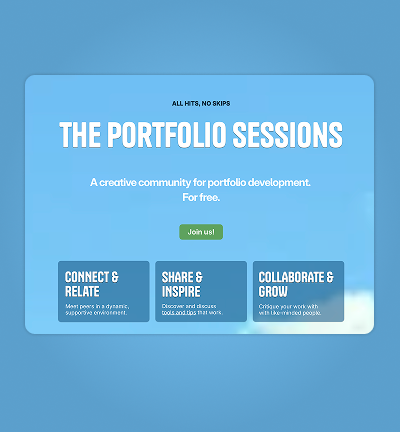
I founded and host a weekly meetup for creative professionals to support portfolio development, job searches, and career growth.
Visit the live site- Client
- Personal Project
- Year
- 2025
- Role
- Founder · Facilitator
- Timeline
- Weekly, ongoing since launch
The problem worth solving
Designers leaving structured environments lose access to honest, recurring critique. The waves of layoffs in the design world has left many creative professionals untethered. Building out a portfolio is difficult at the best of times. The uncertainty in the market and the need to develop new AI skills compounds the anxiety.
I saw an opportunity to develop as a design leader. I wanted to create a safe, reliable space for candid, peer-level critique. This weekly ritual provides opportunities to practice facilitation, build relationships, and mentor growing designers.
Approach
1. The format had to be a ritual, not a one-off
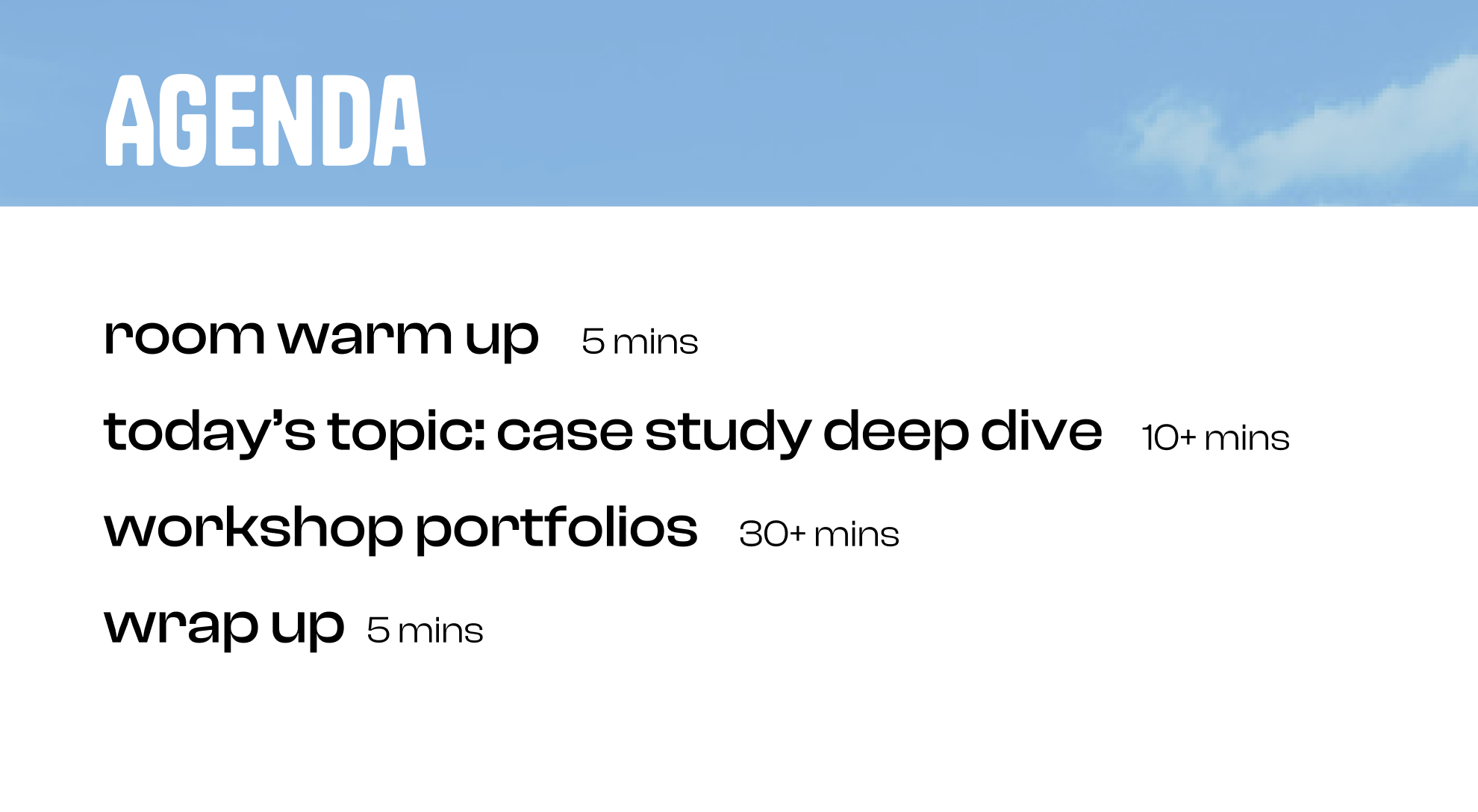
Communities grow over time. A recurring weekly structure builds attendance habits and deepens trust. I designed the session arc to move from warm-up through structured critique to open discussion, giving people a reliable container for vulnerability.
- One hour weekly, Thursdays 10:30–11:30am Pacific via Zoom.
- Short directed discussion → 1:1 breakout rooms (like speed dating for portfolio development) → group wrap.
- A feedback format that balances candor with psychological safety.
- A lightweight membership curation process that protects community quality.
- I showed up weekly as convener, iterated the format on participant feedback, and grew via referral to maintain quality while expanding organically.
2. Brand ecosystem signals seriousness and attracts the right people
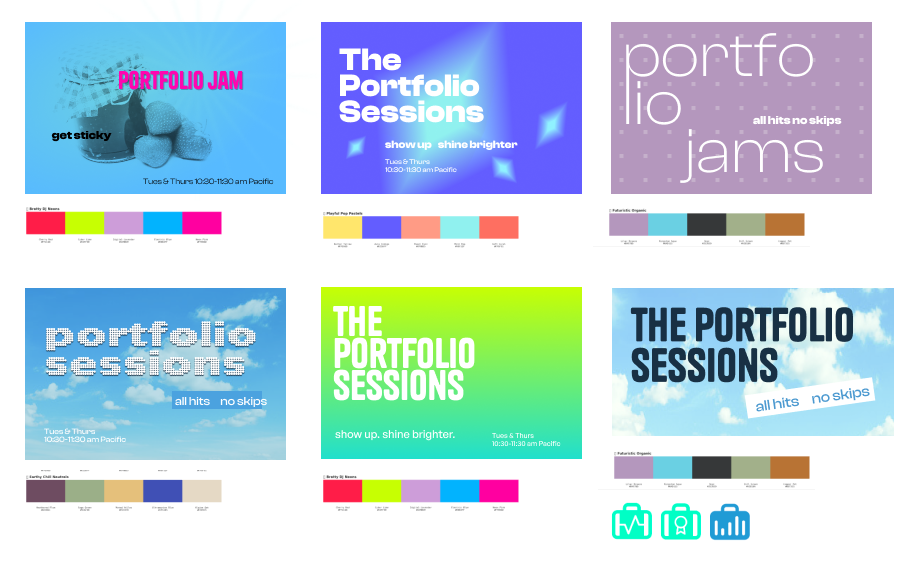
By investing in a cohesive visual identity, a dedicated Framer website, and ongoing Figjam board for resources, I signaled this was a curated, professional space — filtering for people who wanted to show up and do the work.
- Brand identity: named the community; developed wordmark, typographic system, and color palette; created a consistent look across touchpoints — warm but credible (approachable enough to invite vulnerability, refined enough to signal craft).
- Framer website: built and launched the site; designed IA to lead with the value proposition, onboard new members, and function as a marketing surface; optimized for mobile and search.
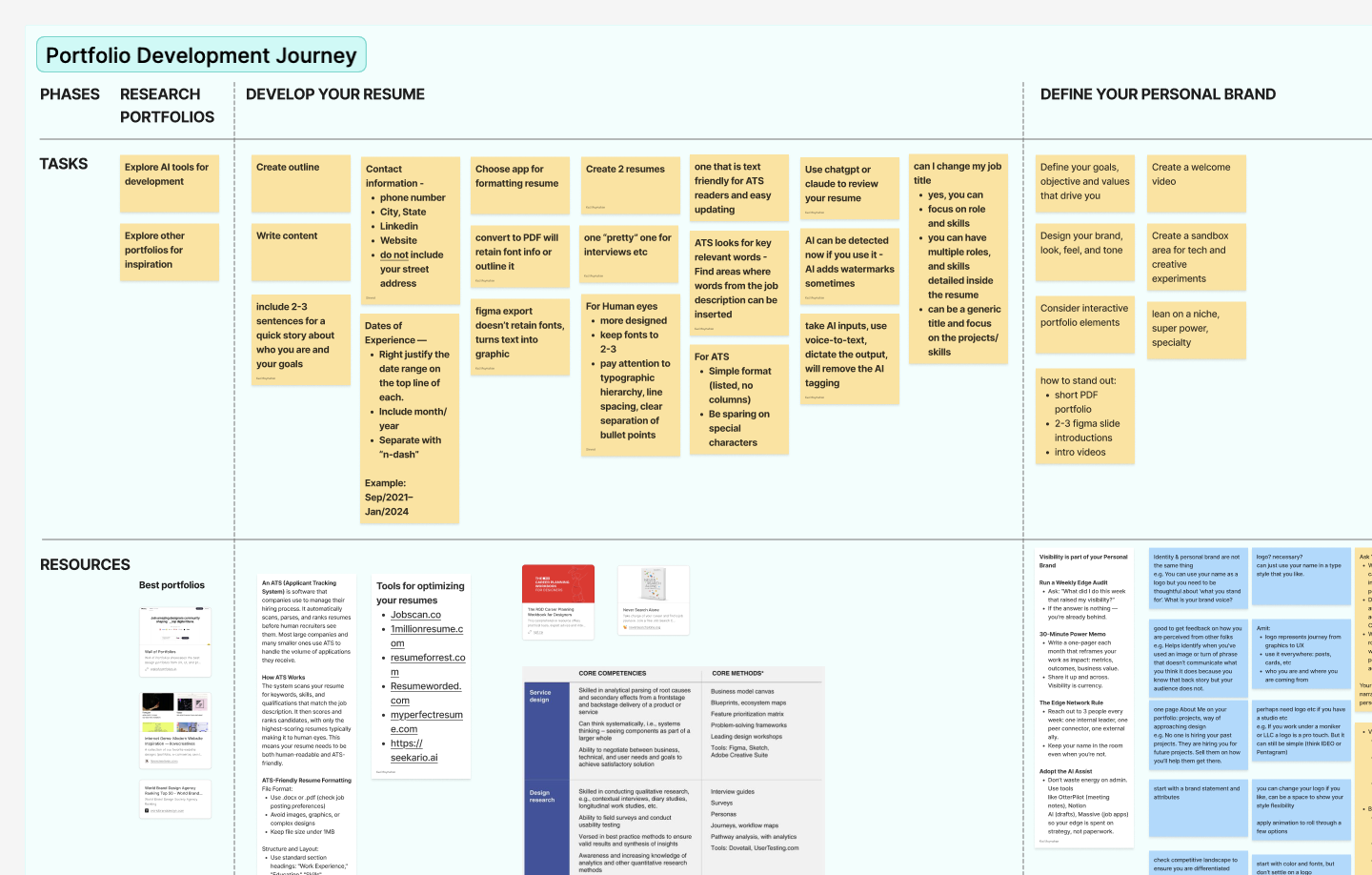
- Figjam board: set up collaborative whiteboard to gather resources; organized resources around key phases in the portfolio development journey.
3. The website as a conversion and AI exploration
The Framer site served double duty: a public home that explained the value proposition clearly, and a surface for me to experiment with AI-generated websites. For consulting prospects, it functioned as proof of taste and craft before they booked a call.
- The community became a flywheel: members referred members, sessions improved each iteration, and visibility supported consulting conversions.
- Structured environments produce better outcomes than unstructured ones, whether the artifact is a portfolio or a product.
Results
- Active community of Bay Area and international design and creative professionals.
- Weekly sessions facilitated since launch, building consistent attendance habits.
- Inbound consulting inquiries attributable to community presence and visibility.
- Community agreements (e.g., Kindness) established psychological safety as a design principle.
"I look forward to these sessions every week. They give me deadlines to work towards, which keeps me on track."
~ Addie A.
What I'd do differently
- Earlier documentation: capturing the evolving session framework as a facilitation guide would have eased bringing in guest facilitators and scaling beyond my own availability.
- Referral program: the site's conversion path was built for cold traffic, but most early members came via referral. Developing perks for referring members would help grow the community.
- Connect to practice explicitly: community and consulting grew in parallel; I could have more intentionally surfaced resources for members at career inflection points, exactly when fractional design-advisory support helps most.
My role
Founder · Facilitator · Brand Designer · Web Builder
- Founded and facilitated a recurring weekly peer-critique community.
- Designed the community model, session structure, and facilitation guidelines.
- Created the brand identity: name, wordmark, typographic system, color palette.
- Built and launched the Framer website and Figjam resource board as conversion and credibility surfaces.
- Developed the referral-based growth model and community agreements.