Agentic AI for Product Designers
A hands-on prototyping workshop that took product designers from AI-curious to AI-capable.
View the class- Client
- Center for Digital Media
- Year
- 2026
- Role
- Instructor & curriculum designer
- Timeline
- Full-day hands-on workshop
Why this mattered
Designers are anxious about AI. They are unsure where it fits in the design process, and are worried that it will replace them. They might not even know where to start, especially when already screen-saturated from a busy workday. Another online course can feel like too much.
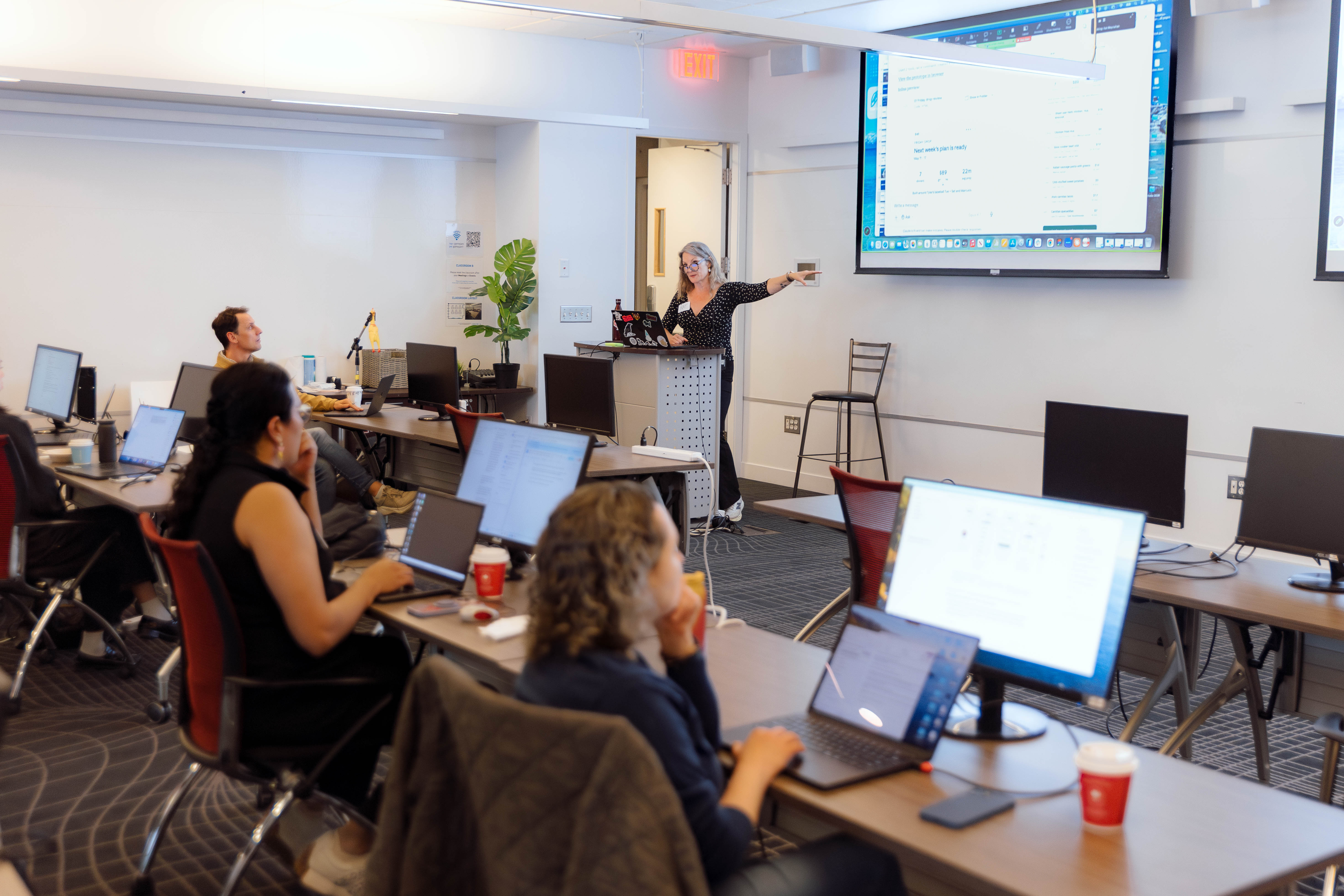
I designed the day-long workshop as a studio, giving the attendees time to explore pair designing with Claude CoWork, and critiquing each others' work along the way. After hands-on prototyping, the class left with something they had built, and clearer about what they uniquely bring to the table in a GenAI product design process.
Approach
1. Reframe the designer's new role
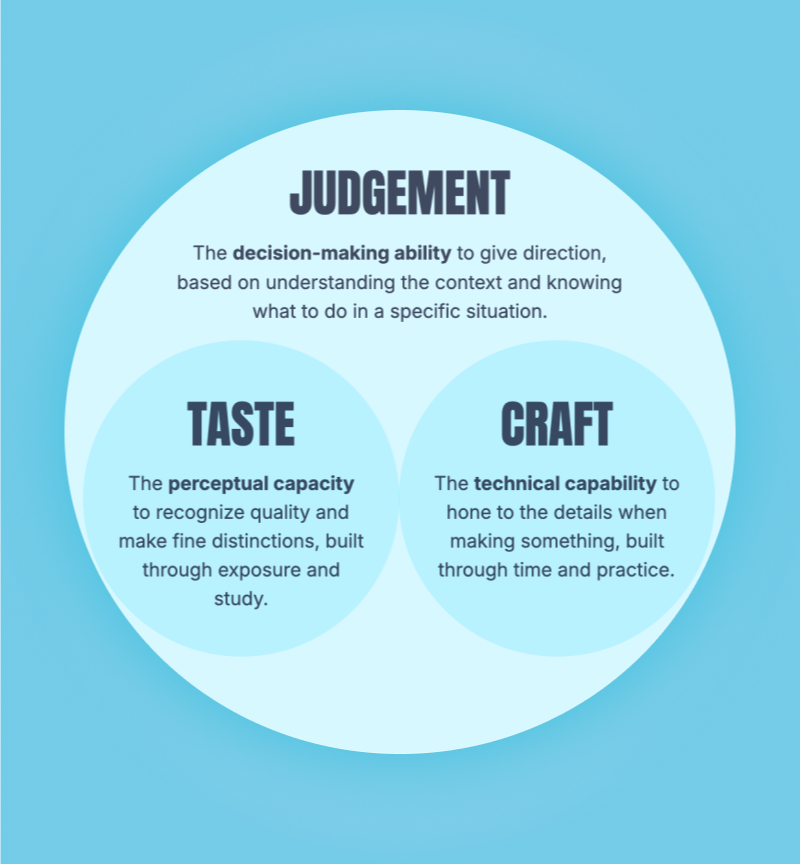
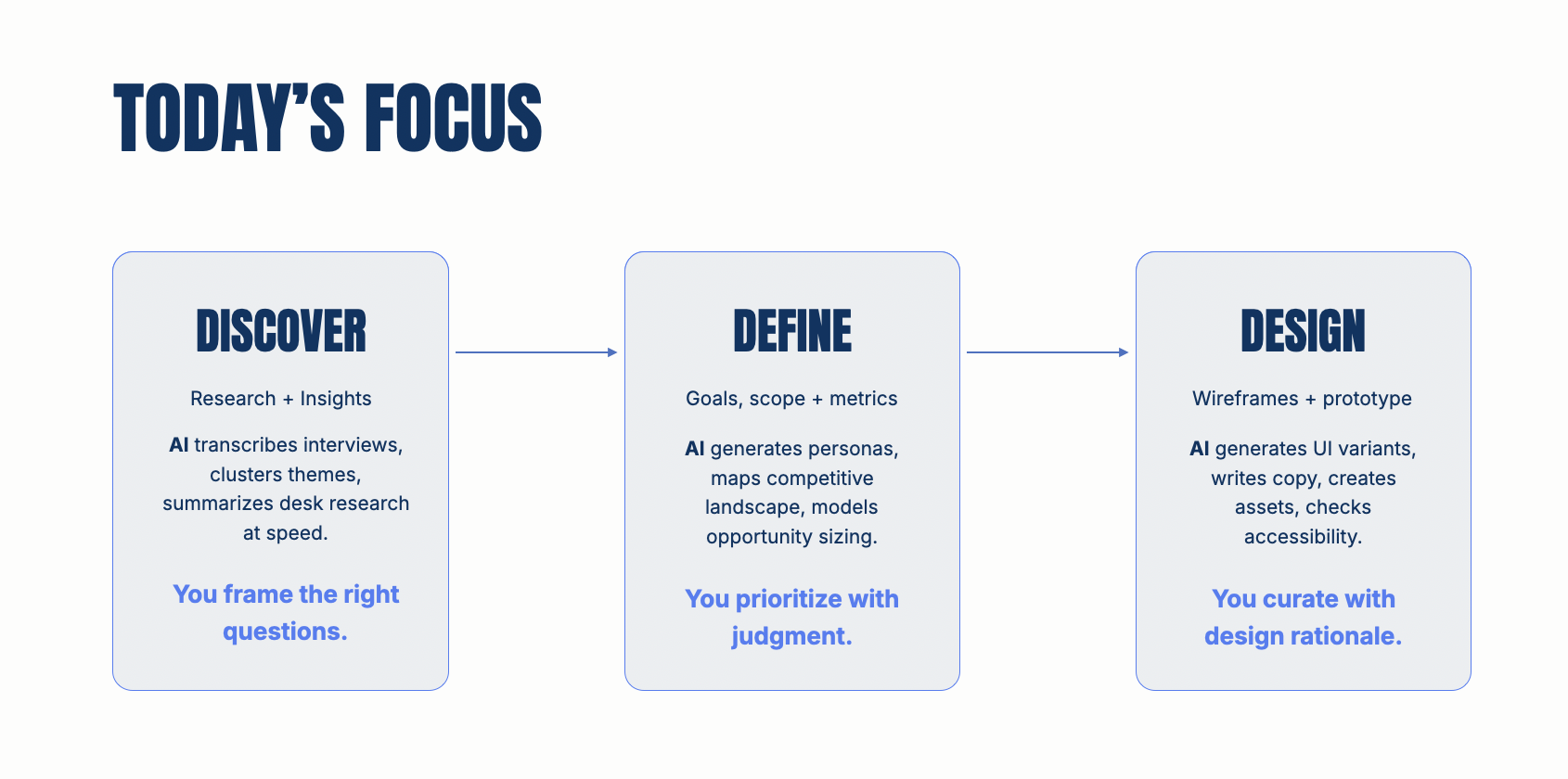
I positioned design as more than producing screens, that it encompasses the discover, deliver, and design phases in the product development lifecycle. AI does the heavy lifting, and the designer brings skills of customer empathy, taste, craft, and judgement, as the one who frames problems, critiques output, and directs the work.
2. Keep it human-centered and honest
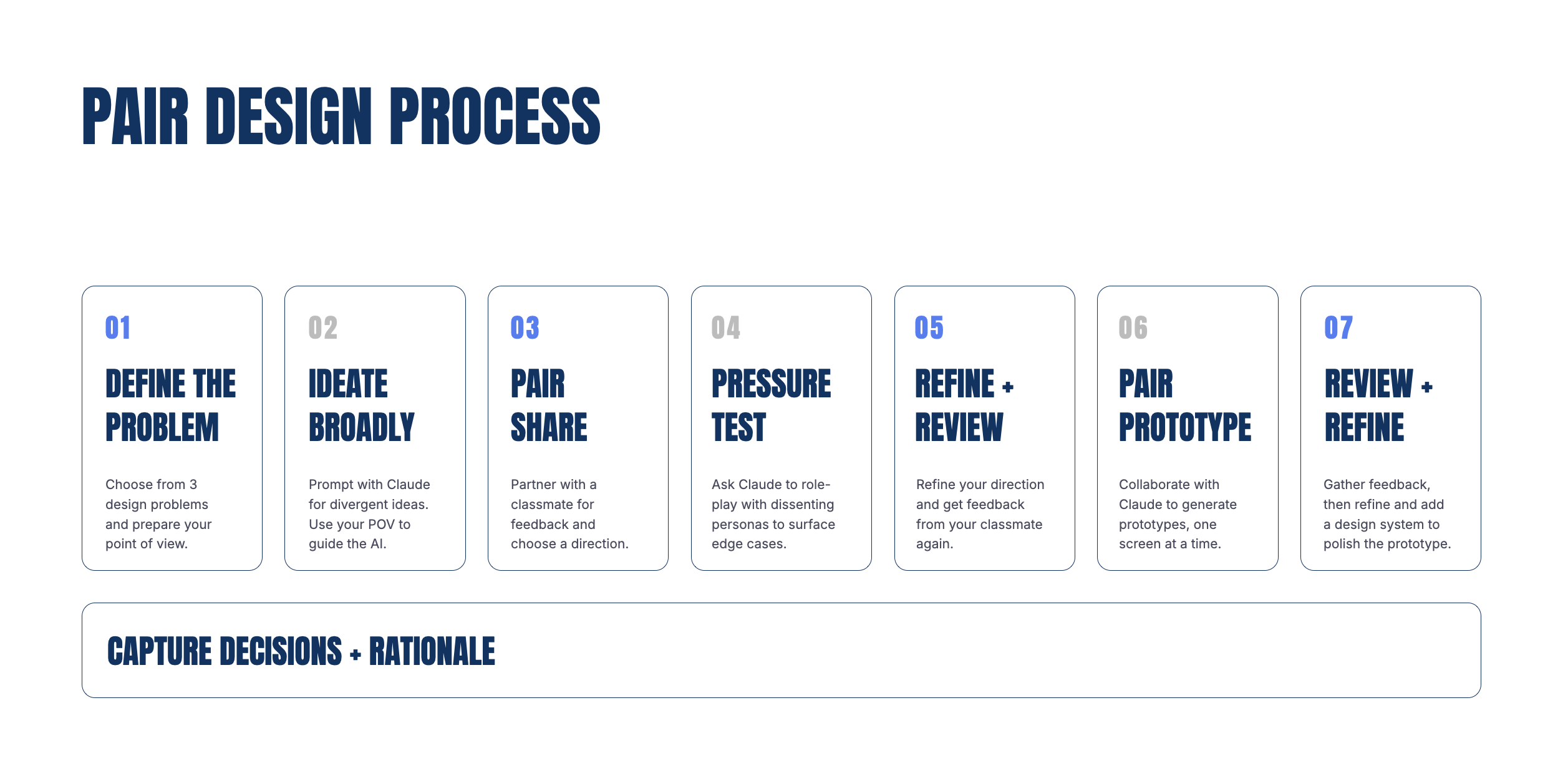
I set up a "design with AI/critique with peers" rhythm to the day, ensuring a human-in-the-loop foundation. I demoed how to customize the agent with a pair design skill, based on Chris Noessel's book, Pair Design.
Given unhurried time to explore and a focus on human-centered design, the class designed for privacy, social dynamics, safety, and decision support — not just speed. The richest moments of the day were the peer discussions, where students pressured tested each others' ideas, and shared tactics for working with AI.
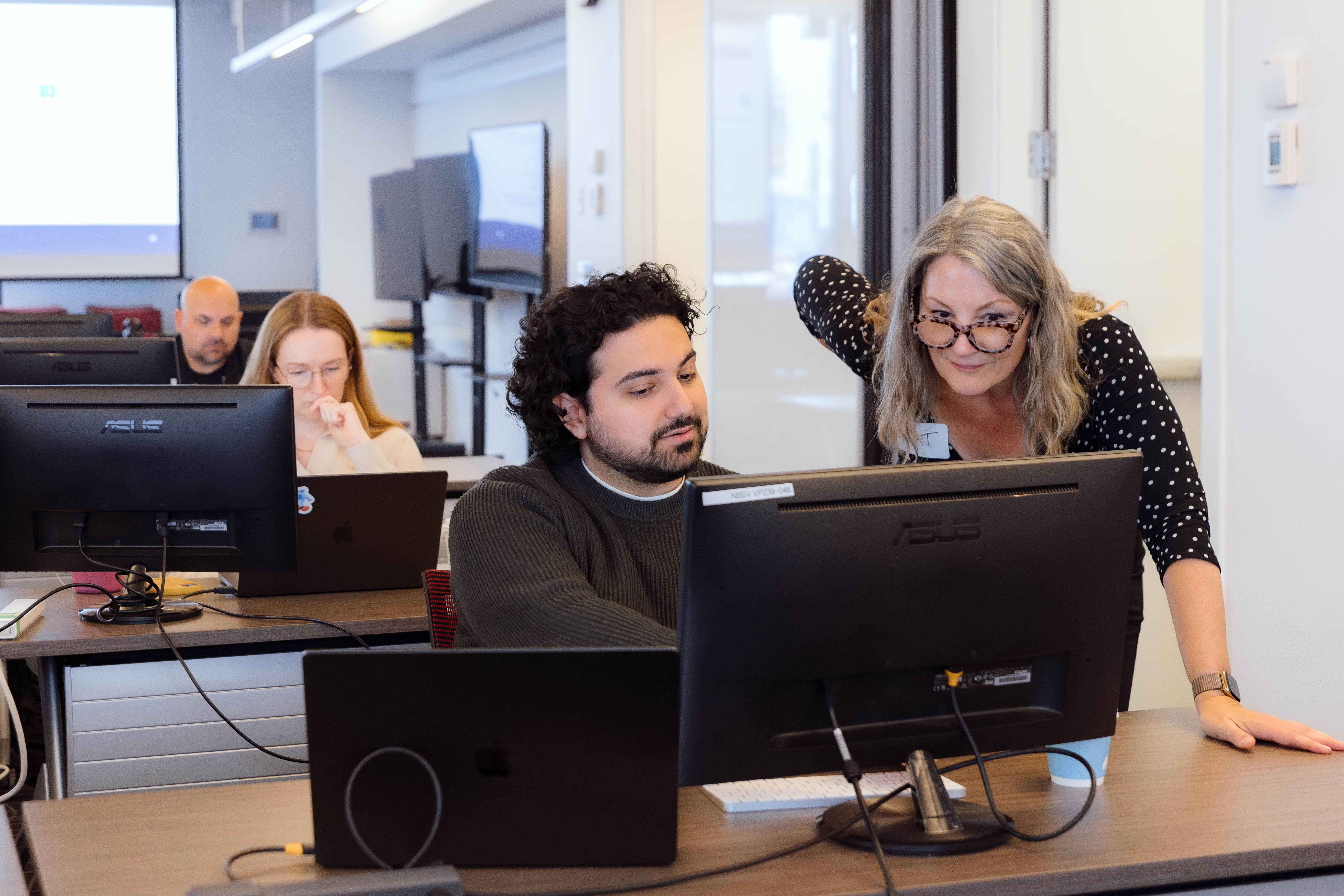
3. Make everyone build something, live
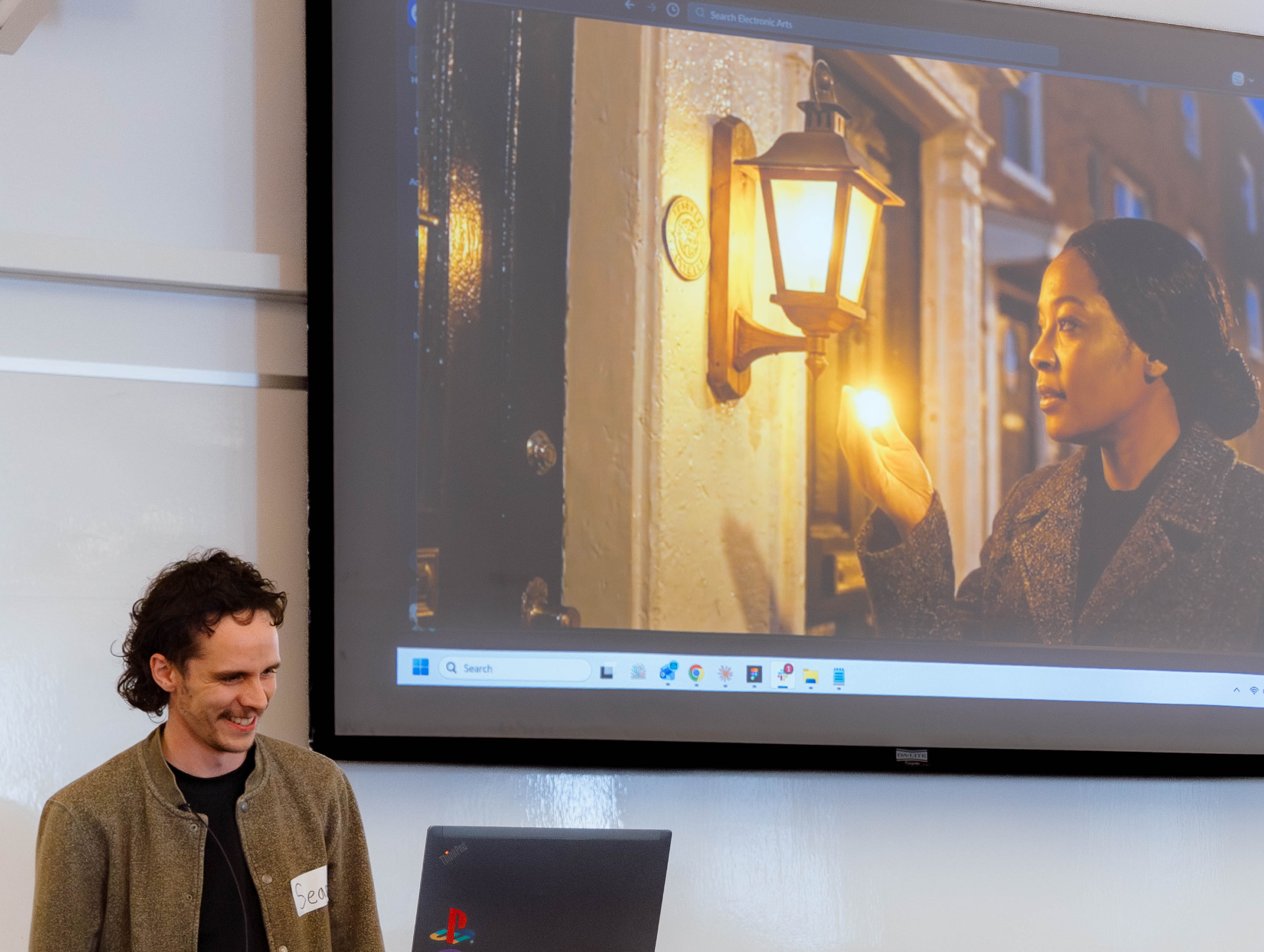
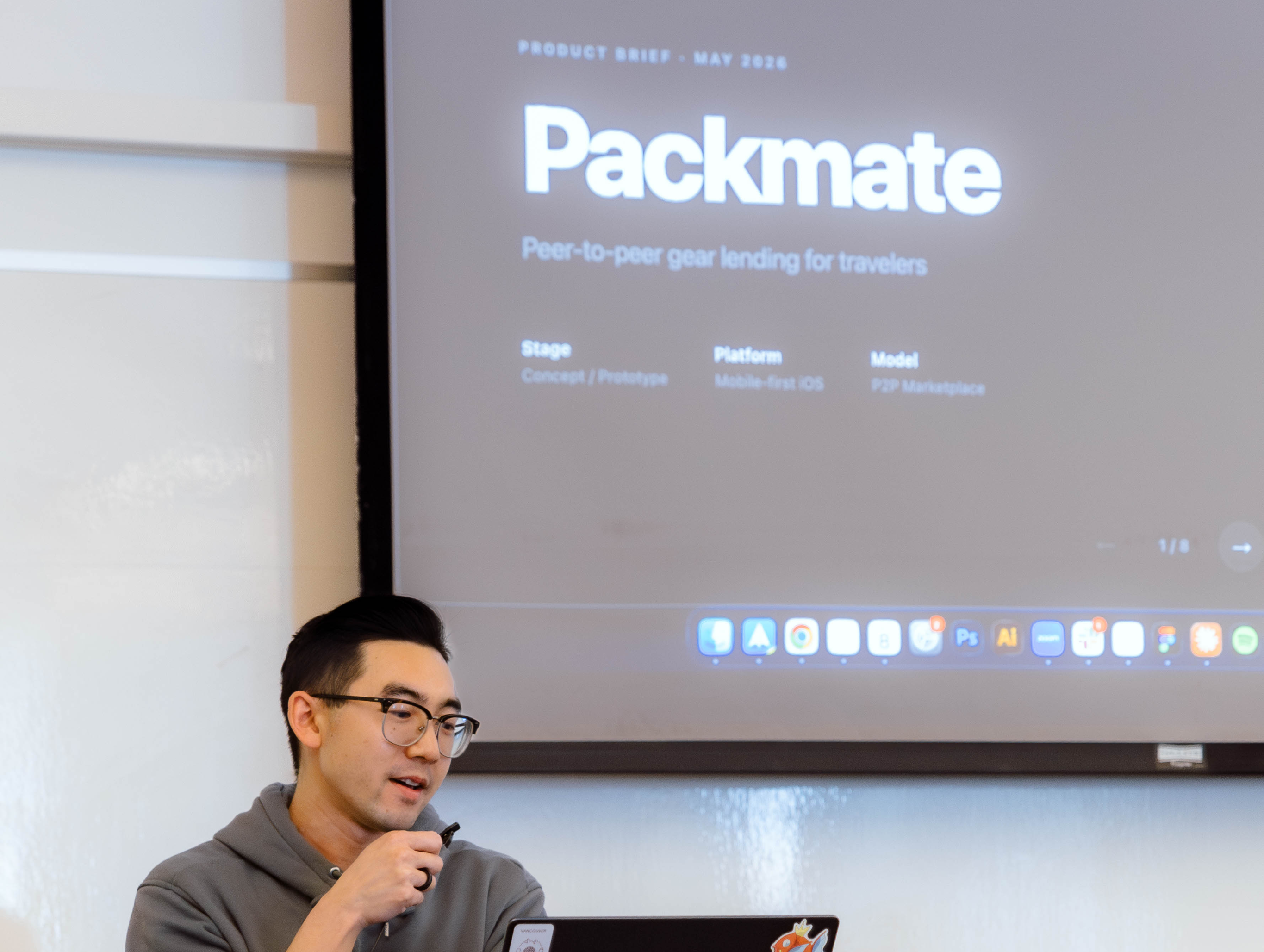
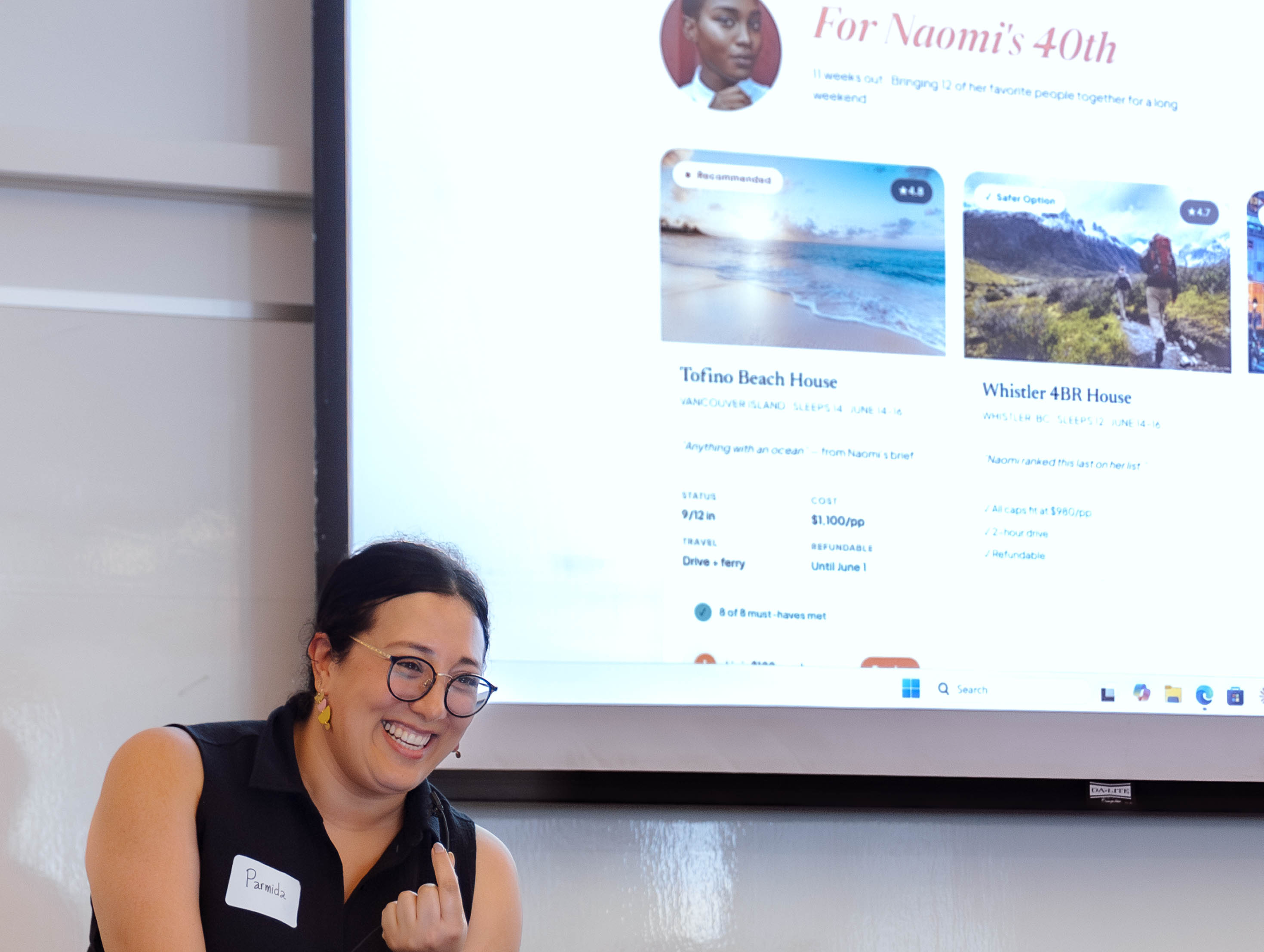
The core of the session was hands-on: all 17 attendees worked across three travel-themed scenarios, producing user flows, prototypes, and decks in real time. And they explored beyond screen-based solutions, such as developing prompts for video prototyping and Swift code, or hopping between AI platforms to ideate visual design. The learning was in the doing.
Everyone presented their working prototype at the end of the day, reporting that real time was saved getting there. They also discovered the edges of the platform, where AI couldn't meet their expectations. Confidence was built through practice and reflection.
Results
- Taught 17 creative professionals in a single full-day, hands-on workshop at the Center for Digital Media.
- Participants left having built a working prototype grounded in research — owning their decisions and articulating tradeoffs with striking depth of rationale.
- Teams explored beyond screen-based solutions — prototyping with video, Swift code, and cross-platform visual ideation.
What's next
Future workshops will include refining CoWork setup and branching tasks, when to connect a design system, optimizing process for token spend, and pre-project planning ROI thresholds.
My role
Instructor · Curriculum Designer · Facilitator
- Designed the day-long curriculum, hands-on exercises, and three travel-themed prototyping scenarios.
- Built a custom pair design agent skill, grounded in Chris Noessel's Pair Design, and demoed customizing the agent live.
- Set up the "design with AI / critique with peers" rhythm, keeping a human-in-the-loop foundation throughout.
- Reframed the designer's role — framing problems, critiquing output, and directing the work.
- Facilitated the session end to end, supported by TAs Ryan Smith and David Gratton.